A brief and accessible yet rigorous introduction to science and philosophy, infused with a bold and inspiring poetic proposal.
Poesophy is born from the recognition that reality can be better understood by joining the three great paths available to us: science, which describes the world; philosophy, which questions its meaning; and poetry, which makes it experiential and sensory. Separated, each reveals only part of what is real. United, they widen the horizon of reality accessible to human beings.
Poesophy proposes a form of language in which the poem and its philosophical interpretation form a unity, like the front and back of a coin. The poem offers symbolic and sensory intuition; its philosophical reverse guides the conceptual reflection that emerges from it. It is as if we placed The Garden of Earthly Delights on the front and Montaigne's Essays on the back.
In this dialogue, science acts as an anchor to reality in the ocean of knowledge. In this way, poesophy guards itself against worlds incompatible with scientific knowledge, so as to focus instead on living it, feeling it, and even conjecturing generalizations from it.
Poesophy does not compete with poetry, philosophy, or science; what it aspires to is to create a meeting place among them, where knowledge can be at once rigorous, reflective, and beautiful.
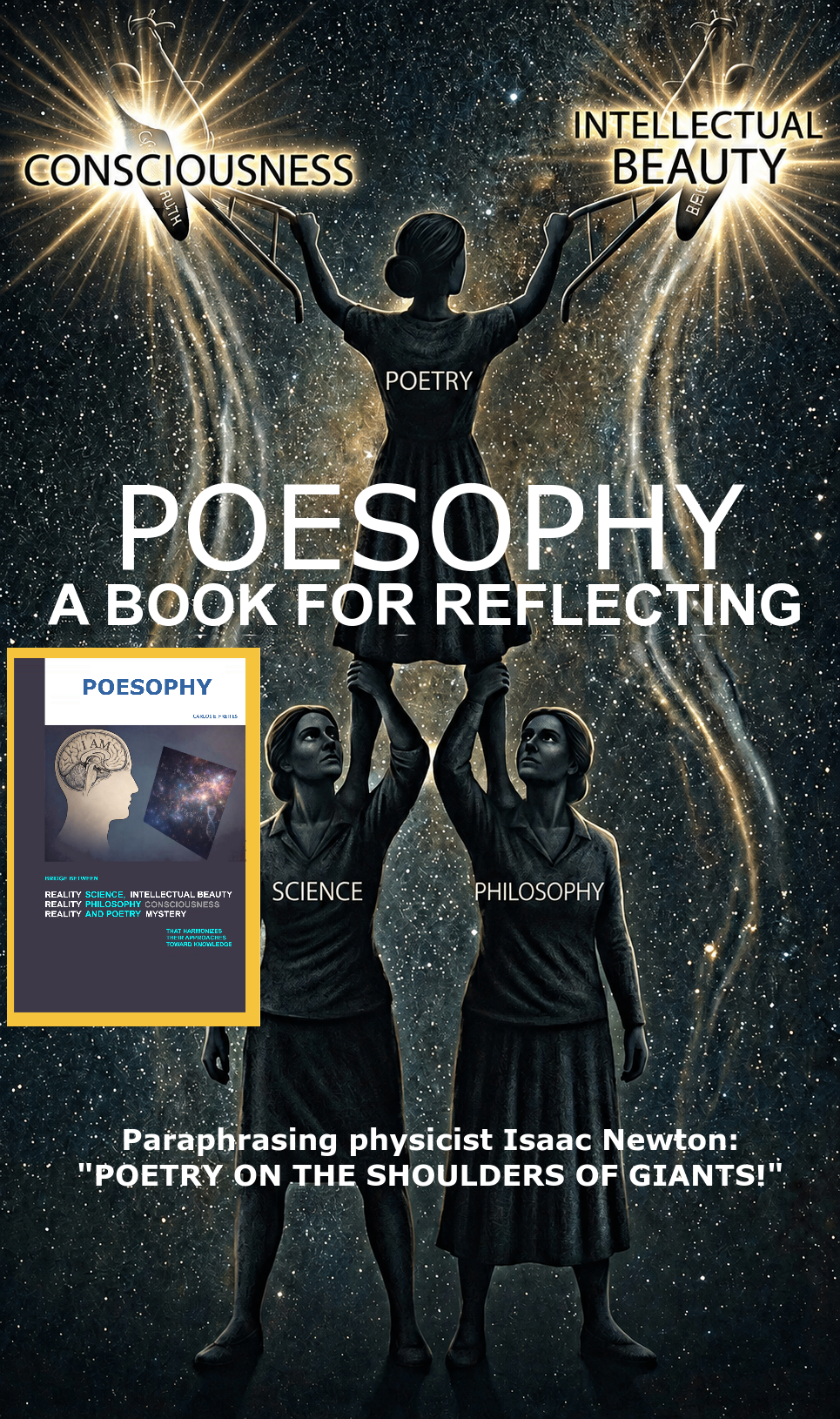
From its very presentation, the book already begins to be suggestive.
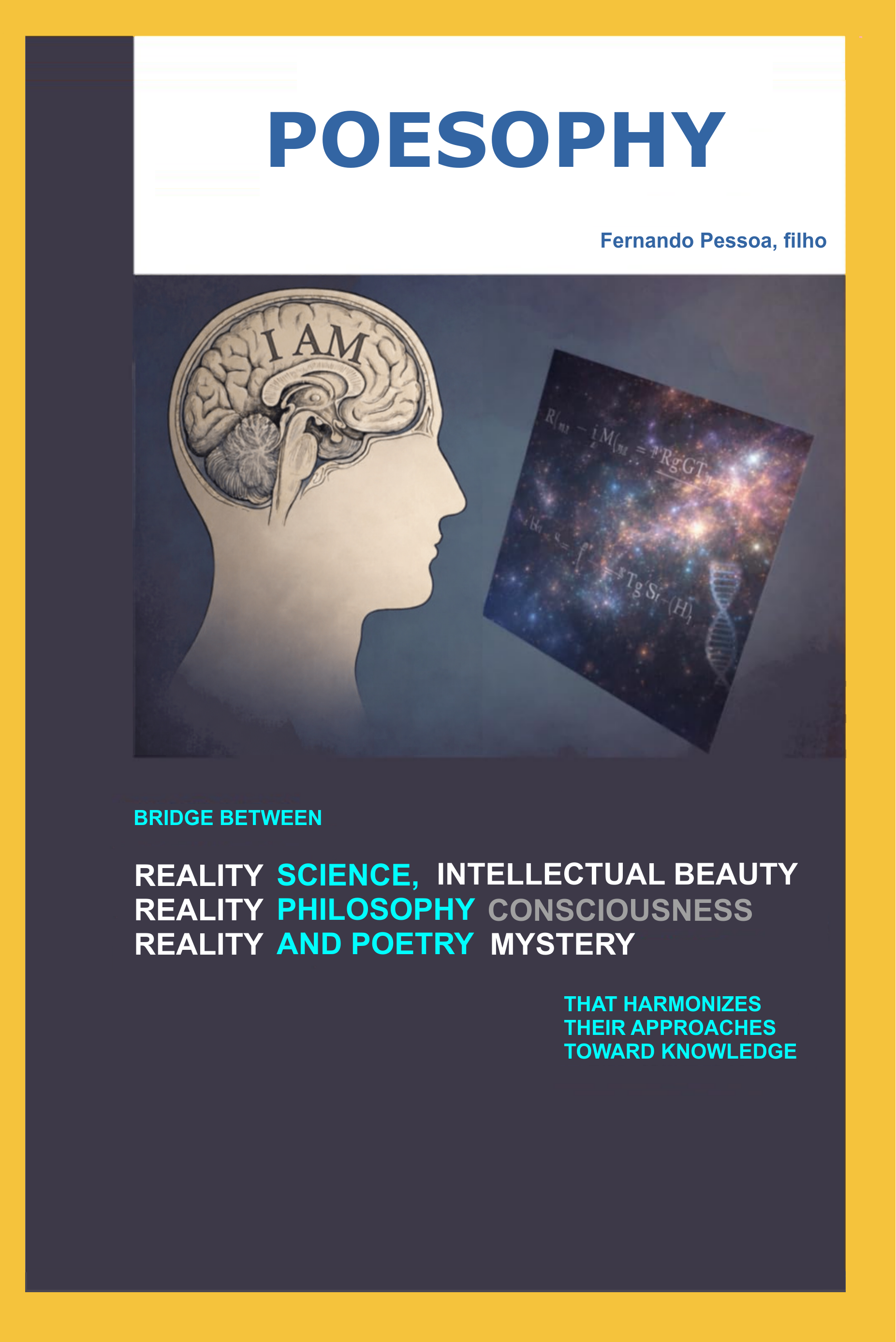
A self glimpsing mathematics and DNA in the universe
Front cover
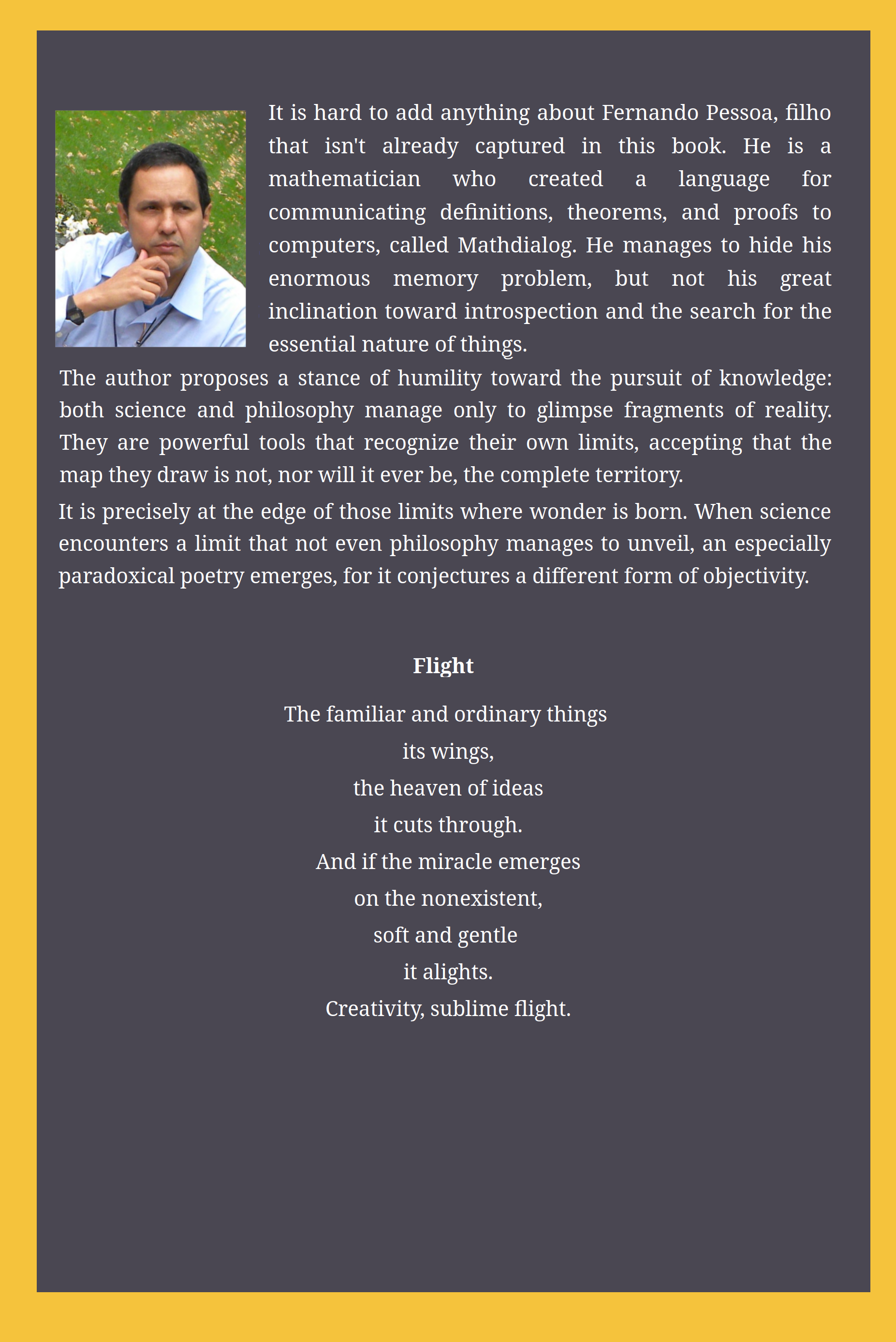
The flight of creativity
Back coverPoesophy is a wonderful introduction to science for humanists and a thoughtful invitation to philosophy and poetry for scientists. All of it brief and engaging, yet intensely profound.
Will evoke the beauty of knowledge in poetry, and philosophy will broaden their horizons by reflecting on its limits.
Will find the ingredient María Zambrano lacked: science.
Will discover the beauty of science, philosophy, and a poetry that, in some mysterious way, aspires to an objectivity beyond reason.
Reality and reality
The sickness
of glimpsing
a reality
unlike
reality.
A reality where
space, time, and causality
exist only as the collage
of a mediocre artist.
Where freedom and nothingness
are like
oxygen and hydrogen.
That blindness
which lets me see only
the infinity
that separates every soul.
The sickness of reality,
a self in the abyss
of a voluntary silence
that will drown me
until my sister, death,
extends her hand to me
and considers me her equal.
The first three lines describe my non-reality, which may differ for each person. It is what we sense, whether unknowingly or subconsciously, when we live out our difference from the other, as expressed in the fourth line. The final line is the acceptance of the reality of the end. Although the poem may seem far removed from science, science itself has a chapter whose reality is not like ordinary reality. In quantum mechanics, reality at the atomic scale (or somewhat larger or smaller) involves things that would be implausible at the everyday scale we inhabit. One example is that light has two natures: it is a wave, but it is also a particle, the photon. Another example is that an electron can not only move from one place to another instantaneously, but does so without traveling any path at all — that is, upon disappearing from one place, it simultaneously appears in another. Without this model, known as quantum leaps, the transistor could never have been developed (the most important component in computers — so important that the one in your phone contains billions of them!), and although it was not needed to discover that light can be converted into electricity, it has been essential to making the now-familiar solar panels more efficient. This means that science has models of how reality functions that are unimaginable, yet that have consequences we can perceive every day.
"Excellent! A hymn to a simple, peaceful life, reflecting on the end."
"The meaning of life, sung with clarity and depth."
"Consciousness as unease, but also as delightful mystery!"
Available in paperback only
Direct shipping or through Amazon
Returns accepted!
Poesophy ©Copyright 2026 Carlos E. Freites.